
Are you feeling wary about finding a new therapist?
Maybe you’ve done therapy in the past — you’ve talked through your history. You’ve identified patterns. You’ve left sessions with action steps, week after week. And still, something isn't shifting.
Or maybe you’re daunted about giving counseling a try. But will it actually make a difference?
These concerns are valid, and real. However, these struggles aren’t always a failure on your part (nor your therapist’s).
Over the past seven years of providing therapy, I’ve found that continued struggles may not always be a matter of “doing more” or “trying harder,” but rather that talking and action steps, on their own, aren't reaching the part of the problem that's actually keeping you stuck.
Instead, there may be something rigid in how your brain processes stress.
This post explains how I am bridging that gap and helping individuals get unstuck: by expanding a holistic approach to therapy with neurotherapy, alongside the talk therapy and EMDR work that has always been part of my practice.
The Problem: When Talking About It Isn't Enough
There's real value in putting words to your experience. Insight matters. Practical strategies matter. But sometimes clients tell me they want more than another conversation about the problem, and more than reviewing coping steps they already know.
What they're really asking for is how to get to the root of the problem. Why does my body react this way even when I cognitively know that I'm safe? Why can I understand my anxiety perfectly and still not feel any different in the moment?
Those questions point to something important. Many of the patterns that keep us stuck don't live only in our thoughts. They live in how the brain and nervous system have learned to respond to stress.
Getting to the root means working with both layers, the story and the physiology. That's what I mean by a holistic approach: one that addresses as much of the whole person as possible.
An Expanded Path: Integrating Brain-Based Techniques with Talk Therapy
The Same Core Foundation
My core model hasn't changed. I've long used the ABC-X model (Hill, 1949) to help clients conceptualize distress: when a stressor (A) meets your available resources (B) and your perception of that stressor (C), the result can be a crisis or sense of overwhelm (X), especially when the demands outweigh what you have to meet them.
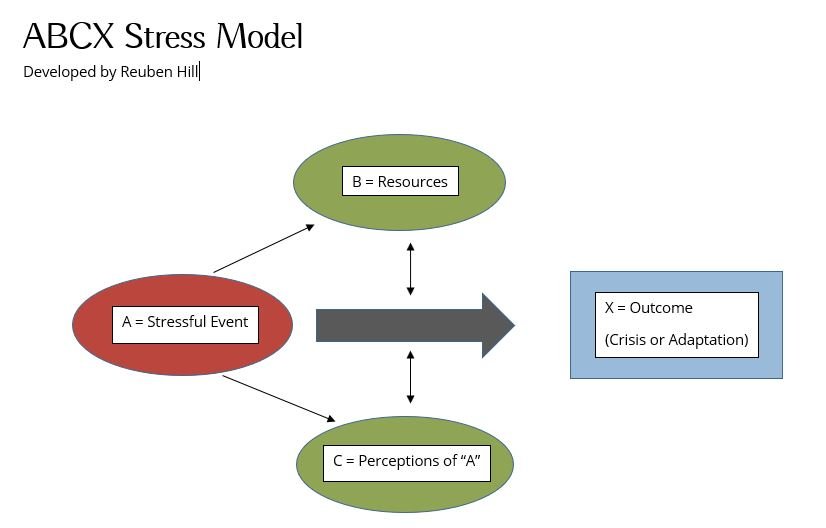
In these moments, the brain shifts into protective states like fight, flight, or freeze. Those states aren't malfunctions. They're your brain doing what it was designed to do, using strategies that may no longer serve you.
Traditional talk therapy models (mine included) aim to help you develop your resources and perceptions, so that you are more resilient to stressors that arise.
Now in my practice, I am adding an additional approach to address the psychophysiological needs that can keep you stuck: how your brain and nervous system respond to stress.
A New Way Forward: Neurotherapy
Neurotherapy is an umbrella term for approaches that measure and train brainwave and nervous system activity directly, rather than only through conversation.
In my practice, it includes three main pieces:
qEEG Brain Mapping
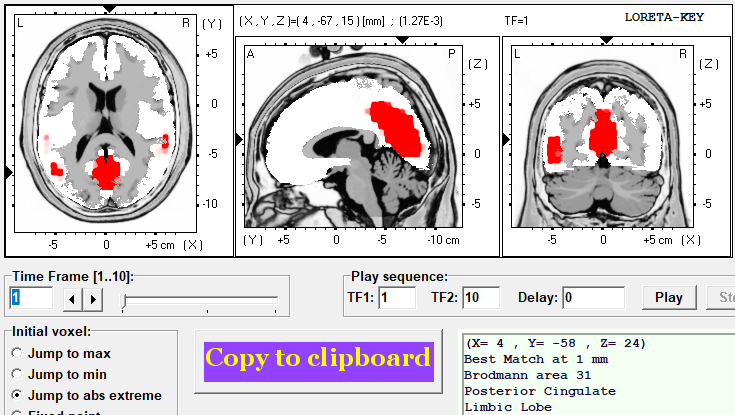
A qEEG (quantitative EEG) brain map records your brain’s electrical activity at rest and during an active-state continuous performance test. The result is a map showing where activity may be over- or under-active, patterns that can relate to anxiety, focus, sleep, mood, and stress response. For neurotherapy clients, this means training is built from a direct look at what your brain is doing, not just a symptom checklist. For counseling and EMDR clients, a brain map is optional but can add objective data to guide your care.
As a Board Certified in Neurofeedback clinician and qEEG Diplomate, I have received extensive training & consultation to collect, analyze, and interpret your brain map. Therefore, I get to walk with you each step of the way to not only analyze your nervous system needs but to create a tailored treatment plan to help you get unstuck.
Heart Rate Variability (HRV)
Heart rate variability measures the subtle variation in time between heartbeats. It's one of the clearest windows into your autonomic nervous system, the system responsible for shifting between stress response and recovery. HRV can show how flexibly your body moves out of "on alert" and back toward calm.
Neurostimulation and HRV Coherence Training
From these assessments, training is how we help these systems shift. Brainwave training (neurostimulation, or neuromodulation) guides your brain to regulate in real-time so it can gradually learn to calm stress responses. HRV coherence training uses breathing and biofeedback to build your capacity to self-regulate, a skill you can practice and take with you outside of session.
Together, these tools help your nervous system regulate and give you more confidence to personally handle stress.
Where Do Talk Therapy and EMDR Fit?
The therapeutic relationship remains the focal point of my practice. Rather than competing with talk therapy or EMDR, neurotherapy informs and supports them.
Once the nervous system has more capacity, the narrative work often becomes more accessible. Talk therapy, attachment-focused work, and EMDR help process difficult memories and reframe the stories that keep you stuck. When EMDR and neurotherapy are combined, we use extended sessions so neurostimulation can ground your nervous system before and after reprocessing.
How much of each modality you use depends on your needs and goals. Some people lean heavily into neurotherapy. Some focus mostly on EMDR or counseling, with or without a brain map guiding the plan. Many benefit from a combination. Your plan is built around you, not around a single modality.
Conclusion
The “root” problem is likely not due to a fundamental personal flaw, though it can certainly feel like that at times.
Rather, the response is how we help your brain, your body, and your concerned parts work together as you navigate stress or try to break free from unhelpful patterns.
My hope in expanding my practice to include neurotherapy is to provide a fuller experience of holistic care, one that cares for you as a whole person — your brain, body, concerns, and hopes of finding a way forward.
If you've felt stuck despite doing the work, and you're curious whether a more holistic approach could help, schedule a free 30-minute phone consultation. You can also read more about neurotherapy, EMDR, and talk therapy.
Frequently Asked Questions
-
Neurotherapy is a set of brain- and body-based approaches that measure and train nervous system activity directly. At my practice, it includes qEEG brain mapping (to assess brainwave activity), neurostimulation (to regulate brainwave activity), and HRV coherence training (to regulate autonomic overwhelm and develop self-regulation skills). It is used alongside talk therapy and EMDR as part of a holistic approach to care.
-
A qEEG brain map is a recording of your brain's electrical activity at rest and under an active task. It shows patterns of over- or under-activity that may relate to anxiety, focus, sleep, mood, or stress response, giving a data-informed starting point for treatment.
-
I do! I am Board Certified in Neurofeedback through the Biofeedback Certification International Alliance as well as a QEEG Diplomate through the International QEEG Certification Board, so the analysis and interpretation of your brain map happen in-house rather than being sent out to a third party. Your results go straight into an individualized treatment plan.
-
Heart rate variability reflects how flexibly your nervous system shifts between stress and recovery. Lower flexibility can show up as feeling chronically "on alert." Measuring HRV helps guide treatment, and HRV coherence training builds your ability to self-regulate. I am trained in HRV coherence through the HeartMath Institute and can teach you research-supported techniques to improve heart rate variability and reduce stress.
-
No! Neurotherapy works with the physiological layer of distress, while talk therapy and EMDR work with the narrative and relational layers. In my practice they're integrated, so each supports the other rather than competing.
-
Yes! Building nervous system regulation through neurotherapy can make it easier to engage with and process difficult memories in EMDR. Whether and how to combine them depends on your goals and what your assessment shows.
-
Not necessarily. Your treatment plan is individualized. Some sessions may focus on brainwave or HRV training, others on talk therapy or EMDR, depending on what you need at that stage of care.
-
A holistic approach addresses the whole person rather than one piece of the problem. Here, that means working with both the relational layer (your history, attachment patterns, and narratives) and the psychophysiological layer (how your brain and nervous system have learned to respond to stress) to get to the root of what keeps you stuck.
-
qEEG brain mapping & neurotherapy are currently only available in-person at my Lakewood, Colorado office, serving the Denver metro area. Counseling and EMDR are also available virtually for adults in Colorado and Ohio.
-
Start with a free 30-minute phone consultation. We’ll talk about what you’re experiencing, what you’ve tried, and whether neurotherapy, talk therapy, EMDR, or a combination is a good fit for you.
From there, care begins with a 60-minute intake interview. If neurotherapy is part of your plan, a qEEG brain map follows the intake; for counseling and EMDR, the brain map is optional.

About the Author
Mark Cadlaon, M.A., LPC (CO), LPCC (OH), NCC, BCN-L, QEEG-DL is a licensed therapist Colorado & Ohio and is Board Certified in Neurofeedback. Mark’s approach integrates neurotherapy with attachment-based and trauma-focused approaches, helping adults overcome anxiety, burnout, and PTSD. If you are interested in working with Mark, reach out to schedule a free 30-minute phone consultation.
References
Hill, R. (1949). Families under stress. Harper & Row.