

Neurotherapy & Integrative Brain Training in Lakewood, Colorado
A Natural, Non-Invasive Approach to Mental Health & Stress Regulation
Traditional talk therapy is a powerful space for growth. However, if you are navigating chronic stress, burnout, or trauma, you might find that you logically understand your triggers, but your body and nervous system still feel stuck.
You might experience this as a mind that won't shut down, persistent sleep issues, or a constant baseline of emotional reactivity.
When stress becomes chronic, it alters the electrical patterns and communication pathways in the brain.

What is Neurotherapy?
Neurotherapy is a safe, non-invasive, and evidence-informed approach to mental health that helps the brain naturally regulate its electrical activity.
Grounded in decades of research and continuously evolving through advancements in neuroscience, neurotherapy looks beyond behavior to support the physical root of your stress response.
By integrating compassionate psychotherapy with advanced tools like qEEG Brain Mapping, Continuous Performance Testing, and Neurostimulation, we work together to understand how your brain is functioning—and how it can be supported to function more optimally.
How Does Neurotherapy Work?
Neurotherapy naturally supports the brain in shifting away from inefficient or dysregulated patterns and toward more balanced, flexible functioning.
This entire process is rooted in neuroplasticity—the brain’s natural ability to change, adapt, and build new neural pathways over time.
Through consistent, targeted sessions, the brain begins to:
Unlearn stuck patterns associated with chronic stress, overwhelm, or heightened emotional reactivity.
Strengthen new patterns related to internal calm, clear focus, and autonomic regulation.
Reinforce adaptive pathways that allow for improved resilience and a better capacity to recover from daily stressors.
As these changes take hold, many clients notice meaningful improvements in their emotional regulation, mental clarity, and overall sense of well-being.
What Does the Treatment Process Look Like?
Care is highly individualized and collaborative. Your journey unfolds in distinct, structured phases so we can collaboratively build regulation and objectively measure your progress along the way.
-
Every brain is unique, which is why we begin by gathering objective data rather than guessing or just looking at a checklist of symptoms.
Comprehensive Assessment Bundle — $950
Clinical Intake Interview (60 Minutes): We spend our first session learning about your unique history. We gather comprehensive context regarding your current symptoms, developmental background, past trauma history, medical or lifestyle factors, and your specific goals for optimization and recovery.
Advanced Data Acquisition (90 Minutes):
qEEG Brain Mapping: We record your resting brainwave activity in Eyes Open and Eyes Closed conditions, using the Neurofield Q21, an FDA 510(k)-cleared, high-fidelity EEG amplifier designed for precise clinical data collection.
Continuous Performance Testing: We run an Event-Related Potential (ERP) task to measure your brain’s real-time information processing. By tracking cognitive processing speed, attention span, and executive control under active task conditions, we isolate precise biomarkers of burnout, focus deficits, or cognitive stress.
Autonomic Profiling (HRV): We measure your Heart Rate Variability to evaluate your current baseline of "fight-or-flight" physical activation.
Review of Key Findings (60 Minutes): Following your data collection, I dedicate approximately one week to personally analyze your results and synthesize the findings. We will then sit down for a dedicated 1:1 session to review your color-coded brain map together. We correlate the data directly to your lived symptoms (such as anxiety, sleep disruption, or trauma responses) and outline a personalized training plan tailored to your specific goals. You receive a copy of this map for your personal records.
-
Once we have your baseline data, we begin targeted training sessions to build emotion regulation, self-awareness, and readiness for deeper processing.
Neurotherapy Session — $175/hour
Integrated Care: Sessions are 60 minutes, integrating neurostimulation with traditional psychotherapy or EMDR.
Targeted, Tailored Training: Based on your brain map data, gentle frequencies target stuck stress patterns, guiding the brain to rebalance itself to greater calm, focus, and flexibility.
Consistency is Key: Similar to how consistent exercise builds physical strength, the brain needs regular practice to develop new habits. To ensure your central nervous system retains what it learns from session to session and builds compounding momentum, we offer two primary training tracks:
The Baseline Track: Designed for steady, long-term integration. This requires a minimum twice-weekly commitment for an initial baseline of 20 sessions.
The Accelerated Track: Designed for condensed, high-impact work. This intensive format offers 1–2 training sessions per day, 5 days per week—ideal for out-of-town clients, professionals on a strict timeline, or those looking to jump-start their recovery.
-
After your initial block of 20 sessions (typically completed over 4-10 weeks), we perform a formal re-evaluation to review your growth and collaboratively define your path forward.
Data-Backed Evaluation — $525 for Remap w/ Review: We conduct a follow-up qEEG brain map, ERP test, and utilize recurring symptom tracking questionnaires to evaluate your progress.
Observed Outcomes: Many clients notice meaningful shifts during this phase, such as reduced physical anxiety, improved focus, and greater emotional steadiness. These internal improvements are frequently reinforced by the visible, healthy changes seen between your pre- and post-training brain maps.
Discerning Next Steps: Based on your results and clinical goals, we will decide whether to continue with standard sessions to lock in your neural changes, adjust your cadence to support long-term independence, or transition into deeper integrative processing. Options may include:
Consolidation: Continue neurotherapy for additional sessions to further strengthen and lock in your neural changes.
Maintenance: Reduce session frequency to support long-term independence and integration.
Transition: Smoothly transition back to routine wellness or your primary therapist to continue care, now that your nervous system is stable and cooperative.
-
For clients ready to bridge autonomic regulation with deeper emotional processing or trauma work with EMDR, we can transition into an extended, integrated format.
90-Minutes — $262.50/session: We utilize targeted neurostimulation at the start to lower autonomic vigilance and open your window of tolerance, creating a grounded internal state for deep EMDR reprocessing.
120-Minutes — $350/session: Following EMDR reprocessing, we transition into a neurotherapy grounding protocol to settle your nervous system, allowing you to leave the office feeling calm, integrated, and present.
The Clinical Benefit: By pairing neurostimulation directly with EMDR, we lower autonomic defensiveness before processing begins and help consolidate your nervous system afterward. This dual approach allows you to move through deeper psychological work safely, efficiently, and profoundly—without leaving the session feeling raw or dysregulated.

Sample Case Study
Presenting Concerns: Chronic anxiety, somatic hypervigilance, and unresolved trauma responses.
Clinical Presentation: The client (adult) entered care reporting a persistent "fight-or-flight" state, chronic sleep disruption, emotional reactivity, and a felt sense of being physically "stuck" despite a strong cognitive understanding of their triggers.
Training Overview: 20 neurotherapy sessions completed over a one-month duration utilizing the Accelerated track.
Clinical Assessment Scores
GAD-7 (Anxiety Scale)
19 — Severe
PHQ-9 (Depression Scale)
18 — Moderately Severe
Initial Assessment
GAD-7 (Anxiety Scale)
15 — Moderate (↓4 points)
PHQ-9 (Depression Scale)
11 – Moderate (↓7 points)
After 20 Sessions
What Changed? Standardized clinical tracking shows a measurable drop in both anxiety and depression scores, shifting from a severe/moderate baseline down to moderate/mild. This positive shift closely correlates with the client's reported relief from daily "fight-or-flight" stress and emotional exhaustion.
After 20 sessions of training, improvements to these scores (measurable drops on both scales) correlate with client reports of a reduction in hypervigilance patterns and an increased capacity for emotional self-regulation.
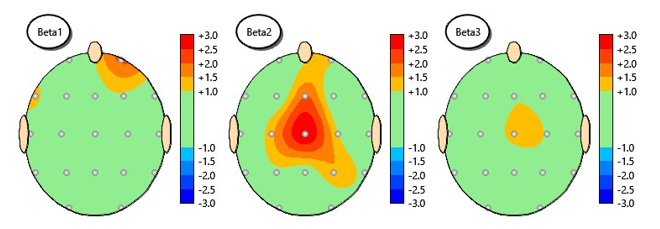
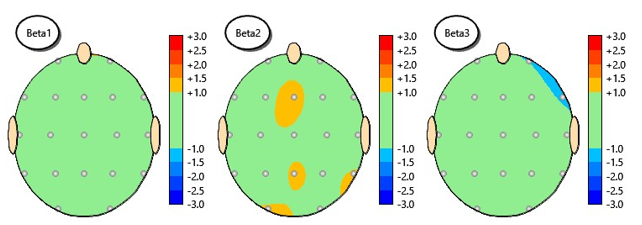
qEEG Brain Map: Measuring the physical brainwave patterns behind stress & overwhelm
Initial Assessment
What Changed? qEEG brain maps show a significant reduction in overactive beta activity (red zones), which closely correlate with client’s presenting symptoms of overactive "fight-or-flight" stress response.
After 20 sessions of training, improvements to these areas (green zones) correlate with client reports of reduction in hypervigilance patterns, improved sleep quality, and widened window of tolerance.
After 20 Sessions
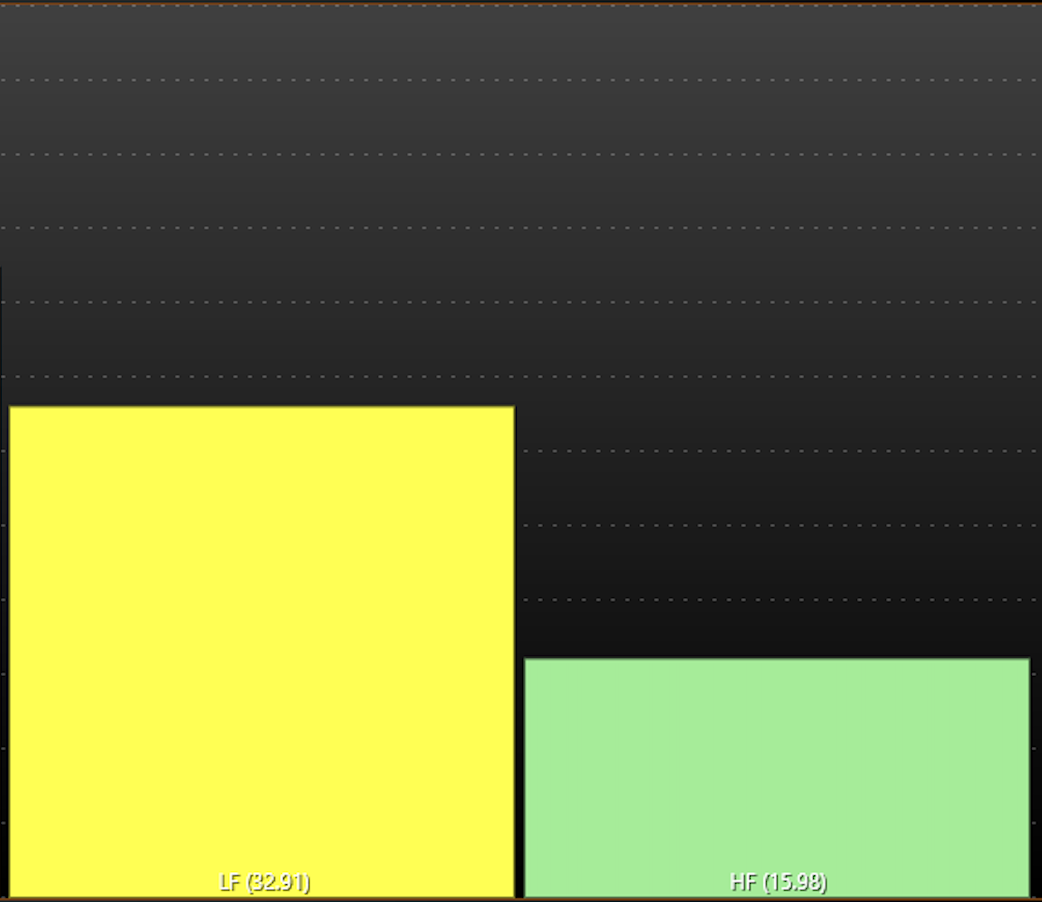
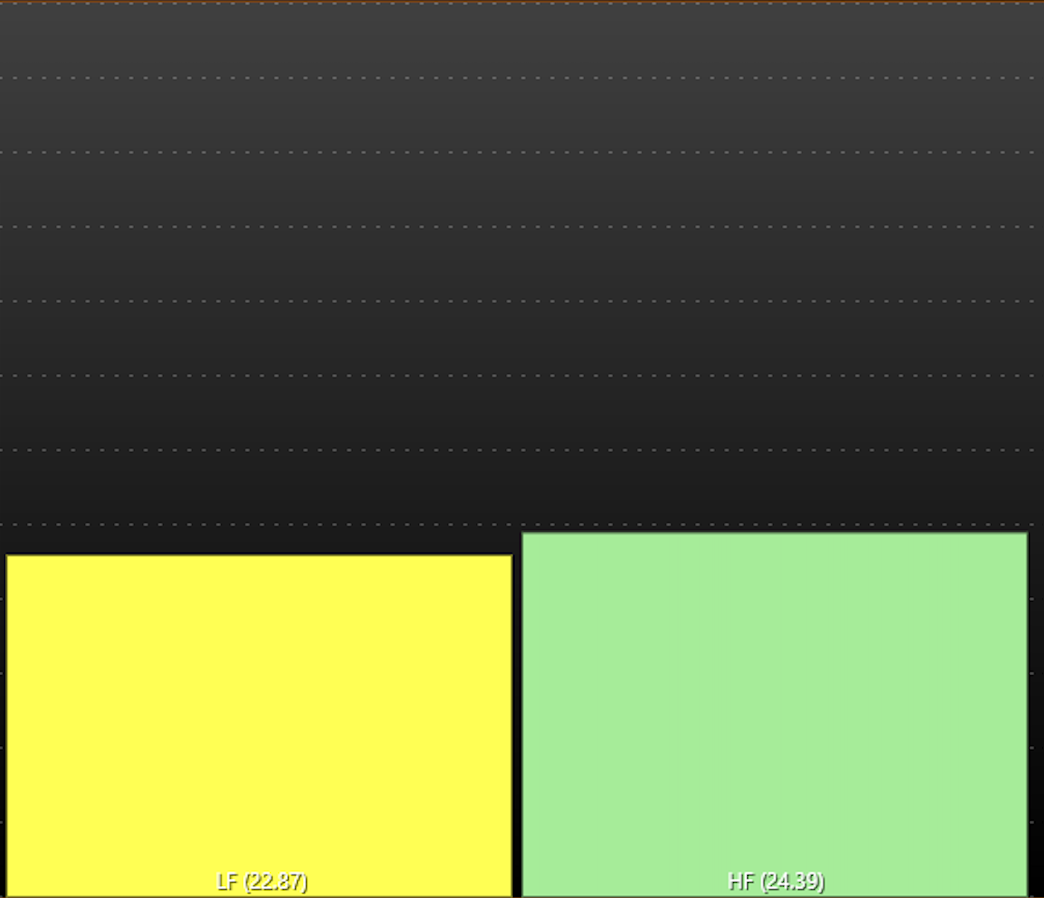
Heart Rate Variability (HRV): Tracking stress response & "fight-or-flight" activation
Initial Assessment
After 20 Sessions
What Changed? HRV data shows a ↓30% improvement to sympathetic activity (LF, yellow bar) and a ↑53% improvement in parasympathetic activity (HF, green bar).
After 20 sessions, the ratio shifted from sympathetic dominance to a healthy, flexible, and resilient autonomic balance, allowing for an improved capacity to engage in EMDR & deeper trauma work.
Disclosure: Client data has been completely de-identified and shared with explicit consent. This case study is presented for informational and observational purposes only. Clinical results are not guaranteed and vary by individual.
Curious If Neurotherapy is Right for You?
Why Integrate Counseling with Neurotherapy?
As the brain becomes more flexible and regulated, your internal experience may begin to shift—sometimes in subtle ways, and sometimes more noticeably.
For many clients, this creates a vital window of opportunity to integrate targeted counseling alongside neurotherapy. You may find that:
New insights, memories, or emotional material emerge naturally without flooding your system.
Old behavioral patterns feel less fixed, opening up the internal space needed to choose new responses.
You want to build practical tools to actively support and navigate your daily progress.
You are ready to move beyond simple symptom relief and step toward deeper personal growth.
Therapy—whether through traditional talk approaches or EMDR—helps you process, integrate, and apply these physical changes to your lived relationships and daily life. Rather than working in isolation, neurotherapy stabilizes the underlying brain patterns while psychotherapy supports your lived experience.

Next Steps: Mapping Your Path Forward
Over time, neurotherapy helps the brain establish and strengthen more adaptive, resilient patterns of functioning.
As these physical changes take hold, the focus of your daily life can naturally shift away from managing exhaustion or anxiety and toward intentional, meaningful living.
If you are interested in exploring whether neurotherapy or an integrative approach is right for your goals, the first step is setting up a free 30 minute consultation phone call.
Neurotherapy FAQs
-
Neurotherapy is an evidence-informed, brain-based approach that optimizes how your central nervous system self-regulates. By measuring and training the brain’s electrical activity, it addresses the physical root of symptoms rather than just managing them behaviorally.
Our practice incorporates state-of-the-art qEEG brain mapping and targeted neurostimulation to support individuals navigating complex trauma, chronic burnout, anxiety, mood instability, sleep disruptions, and executive dysfunction.
-
While both modalities promote long-term neuroplasticity, they guide the brain using different mechanisms:
Neurostimulation (Neuromodulation): Uses gentle, ultra-low electrical or light-based input via the FDA-cleared Neurofield Genesis system to support brain regulation and assist a highly stressed or locked nervous system in accessing a calmer state.
Neurofeedback: Tracks your brainwave activity in real time and uses a reward-based feedback loop (operant conditioning) to train your brain to sustain those healthy, regulated states independently.
-
Because it targets the master control center of your health, neurotherapy supports a broad spectrum of physiological and psychological challenges. Our individualized protocols are highly effective for:
Chronic executive burnout and mental exhaustion
Severe, physical anxiety and panic loops
Complex trauma, PTSD, and somatic hyper-vigilance
Attention, focus difficulties, and cognitive brain fog
Persistent mood concerns and depression
Sleep onset insomnia and disrupted sleep architecture
Peak performance, stress resilience, and nervous system flexibility
-
A Quantitative EEG (qEEG) brain map is a comprehensive, objective assessment of your central nervous system.
Using high-fidelity sensors placed gently on the scalp via our FDA-cleared Neurofield Q21 amplifier, we record the millisecond-by-millisecond electrical activity of your brainwaves. This data allows us to identify the precise mathematical locations of over-arousal or under-arousal tied to your symptoms, removing the guesswork to your symptoms and informing your customized training plan.
Note: A qEEG brain map is a functional clinical evaluation used to inform and optimize your personalized training plan; it is not a tool used to diagnose structural medical conditions or psychiatric disorders.
-
While a standard qEEG brain map records your central nervous system at rest, a Continuous Performance Test uses Event-Related Potentials (ERPs) to capture your brain waves in motion. This assessment evaluates how your brain actually processes information and responds to active demands in real time.
During this brief assessment, you will complete a short, computer-based challenge that measures attention and reaction speed. While you respond to visual or auditory cues, our high-fidelity, FDA-cleared Neurofield Q21 amplifier tracks your brain’s electrical activity in response to these cues. This allows us to see how quickly and efficiently your brain allocates its resources when it is actively working, filtering out distractions, or executing a task under pressure.
Note: A Continuous Performance Test (ERP) is a functional clinical evaluation used to inform and optimize your personalized training plan; it is not a tool used to diagnose structural medical conditions or psychiatric disorders.
-
Ongoing sessions are designed to be spacious, collaborative, and deeply restorative. Each session lasts 60 minutes of dedicated, one-on-one clinical time and typically includes:
Targeted Neurotherapy (30–40 Mins): Gentle, sub-sensory neurostimulation or neurofeedback tailored to your active brain map.
Clinical Integration & Counseling: Brief clinical check-ins, somatic awareness tracking, or targeted psychotherapy (such as EMDR) to process and integrate changes as they occur.
-
Neuroplasticity requires consistency and repetition—much like consistent physical exercise building strength and muscle memory. To achieve durable neural changes, sessions are scheduled on a minimum twice-weekly basis for an initial baseline of 20 sessions. Your progress is monitored continuously and reviewed formally at the end of this block.
Accelerated Option: For individuals navigating intensive recovery or tight schedules, an accelerated format consisting of 1 to 2 training sessions per day, 5 days per week.
-
Progress is unique to every nervous system.
Some individuals experience shifts in physical anxiety, morning alertness, or sleep quality within the first few sessions, while for others the stabilization is more gradual. Over time, progress typically shows up as a greater sense of level-headedness during conflict, a reduction in the physical intensity of stress, and an increased capacity for internal calm.
We validate your subjective improvements objectively by conducting a follow-up qEEG brain map after your 20th session to visually measure the physical shifts in your neural pathways. Repeat qEEG brain maps and recurring symptom tracking questionnaires can also be used to track progress.
-
Yes. Neurotherapy is a natural, non-invasive, and non-pharmacological approach that is well-tolerated. The neurostimulation protocols we utilize introduce gentle, imperceptible micro-pulses.
Both the Neurofield Q21 amplifier and the Genesis stimulation unit are FDA-cleared clinical devices engineered to meet rigorous safety and manufacturing standards.
Some people may experience mild, temporary, and normal adaptive effects immediately after a session—such as feeling mildly fatigued or more alert than usual—which quickly resolve. Every session is monitored and adjusted directly to your response and comfort level.
-
Integrated neurotherapy and neurostimulation are safe, non-invasive, and well-tolerated, but like any clinical intervention, there are a few standard medical contraindications we monitor.
If you have an active implanted medical device (such as a pacemaker or deep brain stimulator) or a history of unmanaged focal epilepsy/seizures, we will need to carefully evaluate suitability, and you may require medical clearance from your physician.
During our initial 30-minute consultation, we will thoroughly review your health history to ensure that our protocols are entirely safe and appropriate for your unique system.
-
Absolutely. Neurotherapy is backed by decades of peer-reviewed neuroscience, engineering data, and an accelerating body of clinical research validating its efficacy for anxiety, attention difficulties, and autonomic nervous system regulation.
While individual results vary based on consistency and unique clinical histories, the vast majority of our clients demonstrate measurable physiological stabilization alongside substantial improvements in their daily quality of life, focus, and emotional clarity.
-
Yes, and this integration is where the most profound transformations happen.
When your brain is locked in a severe fight-or-flight pattern, engaging in deep trauma processing can occasionally flood your system.
By pairing neurotherapy with EMDR or psychotherapy, we use advanced technology to calm the physical survival response first. This creates a regulated internal space, allowing you to move through deeper psychological processing safely, comfortably, and efficiently.
-
Yes. Whether your goal is to optimize your current treatment or explore non-pharmaceutical alternatives, our integrated approach can support you.
Many clients come to our practice specifically looking for an alternative to traditional psychiatric medications, often due to unwanted side effects, a plateau in their progress, or a desire for a long-term, self-sustaining solution. Traditional medications work from a "top-down" chemical approach—temporarily modifying neurotransmitters to manage symptoms.
Neurotherapy (including qEEG brain mapping and neurostimulation) takes a "bottom-up" physiological approach. Instead of altering your brain chemistry from the outside, neurotherapy optimizes the neuroplasticity of your brain to train your brain’s electrical pathways to self-regulate.
If you are currently taking medication, neurotherapy can safely run parallel to your regimen to help stabilize your nervous system. While I do not prescribe, alter, or manage medications, I routinely collaborate with prescribing physicians and psychiatrists to support clients who choose to safely and gradually taper off their prescriptions under medical supervision as their brain baseline improves.
-
Prices for neurotherapy services are as follows:
Initial Intake & qEEG Brain Map Assessment — $950
Intake Interview (60 minutes)
qEEG Brain Map & Cognitive Performance Testing (90 minutes)
Review (60 minutes)
Individual Neurotherapy Sessions — $175/hour
Integrates counseling or EMDR
Repeat qEEG w/ Review — $525 each
Review (60 minutes)
Complementary neurostimulation session during review (optional)
To protect the precision, technological customization, and individualized depth of your care, neurotherapy services are provided on a private-pay baseline.
Insurance companies frequently enforce strict limitations on session length and modalities, which directly conflicts with an integrated, high-tech neurotherapy model.
I gladly provide monthly superbills listing all standard clinical diagnostic and procedure codes, which you can submit directly to your insurance company to seek any out-of-network reimbursement you may be entitled to under your plan. Coverage and reimbursement amounts are determined solely by your insurance provider. Health Savings Account (HSA) and Flexible Spending Account (FSA) cards are also gladly accepted.
-
Consistency is the most vital variable in training your brain’s electrical pathways and achieving lasting neurological change. Because your specific session time requires dedicated clinical preparation and the booking of advanced neurotherapy hardware, our practice requires a 48-hour notice for any cancellations or rescheduling requests. Cancellations made with less than 48 hours' notice, as well as missed appointments, are subject to the full session fee.
Additionally, neurotherapy is a direct physiological intervention that relies on an alert, stable central nervous system. To ensure safety and efficacy, sessions cannot be conducted, will be ended immediately, and will be billed at the full rate if a client presents with:
Intoxication or Substance Use: Being under the influence of alcohol, cannabis, recreational drugs, or unmanaged sedating substances, all of which alter EEG baselines and render neurostimulation unsafe or ineffective.
Severe Drowsiness: Extreme lethargy or an inability to remain fully awake and alert during active training or mapping.
Acute Distractibility or Unsafe Environment: For virtual neurotherapy care, attempting to take a session while driving, multitasking, or signing in from a public space that compromises medical privacy and device focus.
This policy is strictly enforced to protect the clinical schedule, the integrity of your brain training protocols, and your physiological safety.
-
Neurotherapy is an excellent fit if you feel like you are locked in a constant, exhausting battle with your own physiology. If you find that your body reacts with a pounding heart, a tight chest, or racing thoughts even when you logically know you are safe, your nervous system is likely stuck in a chronic fight-or-flight loop.
This advanced approach is specifically designed for individuals who:
Have hit a plateau with traditional talk therapy because their physiological hypervigilance is too high to allow for deep processing.
Want a non-pharmaceutical, long-term alternative to manage anxiety, ADHD, or chronic stress.
Experience intense brain fog, executive dysfunction, or physical burnout and want objective, data-driven insights into how their brain functions.
If you are tired of simply managing your symptoms and are ready to train your brain's underlying electrical pathways for lasting stability, neurotherapy is a powerful option. We can look at your specific goals during a complimentary 30-minute consultation call to see if a qEEG brain map and targeted neurostimulation match your journey.
